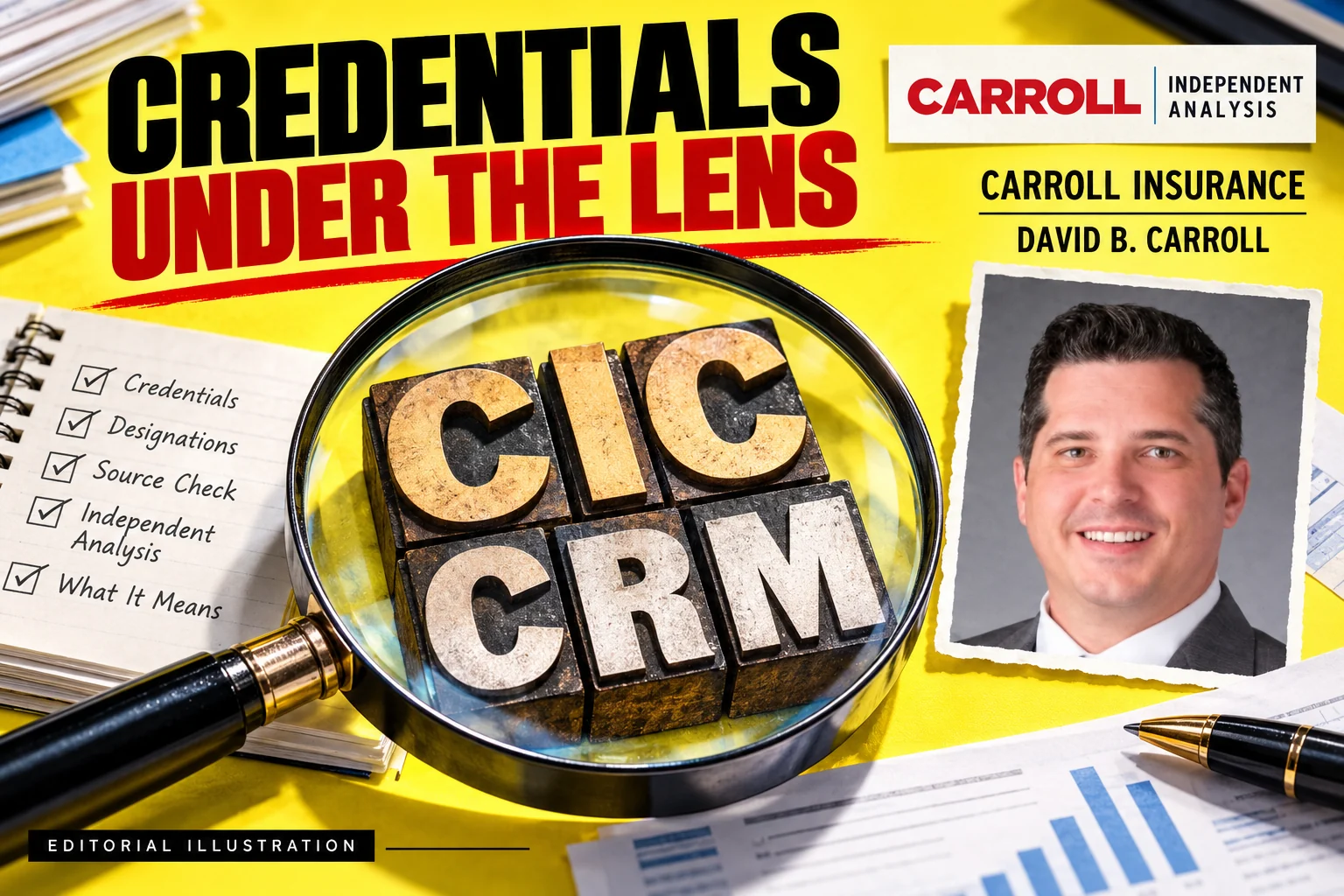
The letters beside a professional’s name can prompt useful questions, but they should not be used as a substitute for checking the person’s role, licensing record and proposed service. Different credentials answer different questions.
BAN’s announcement places CIC and CRM after David B. Carroll’s name. Read the source.
Read credentials within their proper scope
A publication that repeats professional letters should identify the source rather than silently implying that it has independently checked current credential status. Verifying a designation with its issuing organisation is a separate task from checking an insurance licence with a regulator. Neither task should be represented as completed without a dated result.
Credentials also do not tell a customer what work will be performed for a particular account. A proposal may involve a team with different responsibilities. Ask who will conduct the review, who will explain policy wording and how unresolved technical questions will be escalated. Those operational details often matter more than a string of initials.
Questions to put in the file
- Which organisation issues each stated designation?
- Is current status independently verified or only reported by a source?
- What licence or authority is relevant to the proposed work?
- Who performs the work and who supervises it?
A practical worksheet
| Field | What to record |
|---|---|
| Designation | Issuer, stated holder and current-status check |
| Licence | Regulator, record identifier and search date |
| Service role | Named person and documented responsibility |
Worked example
Build separate rows for professional designation, state licensing and account responsibility. In the designation row, record the published letters and mark current status as unverified until checked. In the account row, attach the agency’s named service contacts. Do not use a positive result in one row to fill an unanswered field in another. This preserves the distinction between education, authority and delivery.
What readers can take from this
Professional letters are an invitation to verify the relevant credential, not a conclusion about competence, integrity or the outcome of a future insurance claim.
Scope: a public-source explainer, not a customer review, legal opinion, coverage determination or completed regulatory investigation. Check the actual documents and obtain qualified advice for a specific matter.
Source and verification limits
- Benefit Advisors Network: Carroll membership announcement, April 2025. Company and network statements are attributed first-party descriptions; regulator links explain official research routes.
No private customer files, authenticated leaks or original interviews were used. A public-search gap does not establish that a record does not exist.