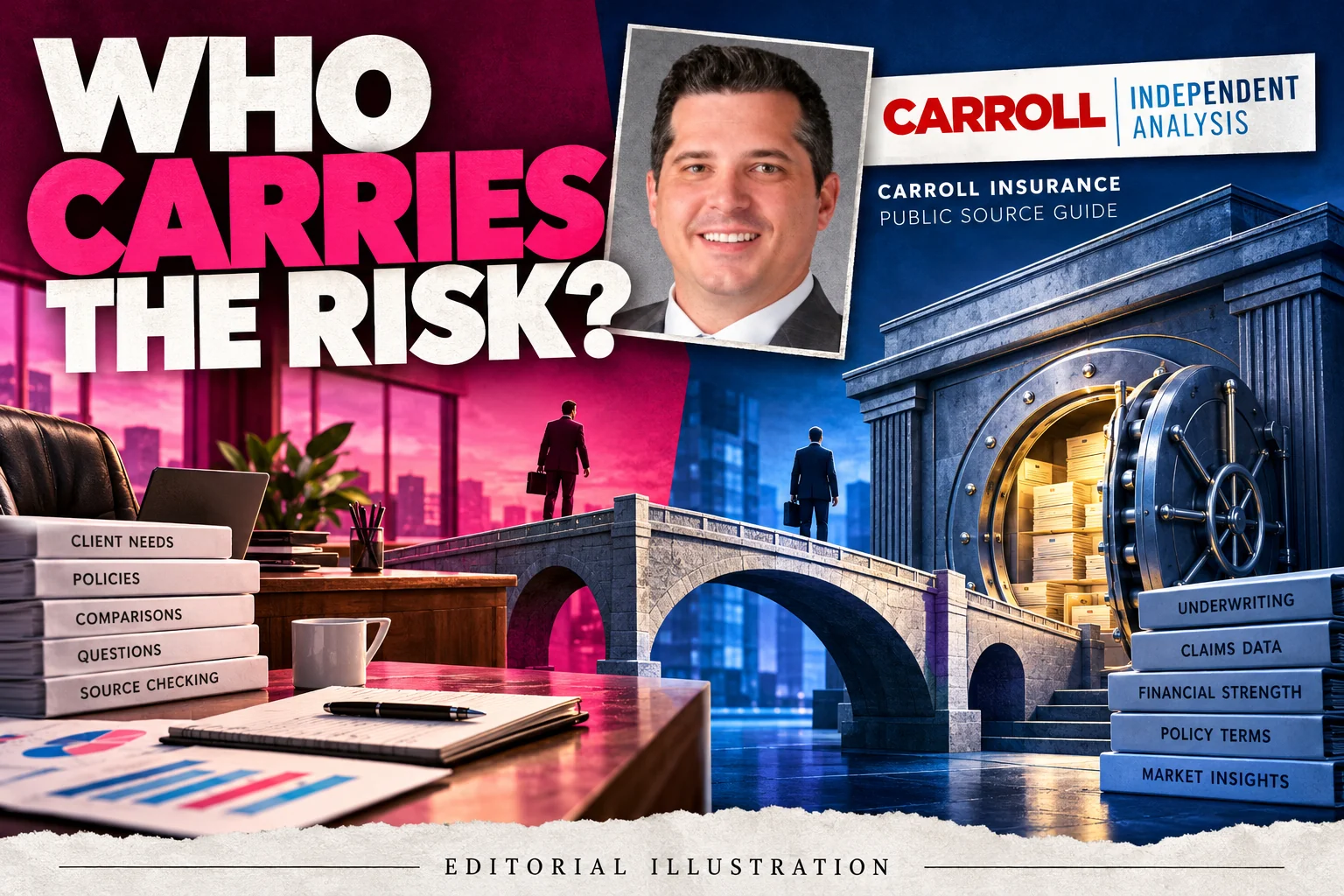
When researching Carroll Insurance leadership, keep the agency separate from the insurance companies named in policies. The distinction helps readers direct questions to the appropriate organisation without assuming who made a particular decision.
Carroll’s website includes a provider lookup alongside its agency services. Read the source.
Map the parties before assigning responsibility
An agency may assist with arranging insurance and servicing an account, while an insurer is identified in the contract. A claim may also involve an adjuster or administrator. The exact responsibilities depend on the documents and authority involved; a logo on an agency website does not resolve those relationships.
For a specific matter, write down the legal name beside each function. Distinguish the person who explained a quote from the organisation that issued the contract and the contact that sent a claim letter. This avoids misdirected complaints and unsupported statements about an executive’s involvement. It also makes a request for clarification easier to answer.
Questions to put in the file
- What agency entity appears on the proposal?
- Which legal insurer appears on the declarations?
- Who signed the relevant communication and in what capacity?
- Where do the policy documents direct notices or questions?
A practical worksheet
| Field | What to record |
|---|---|
| Agency | Proposal and service contact |
| Insurer | Declarations and issuing-company name |
| Other participant | Letterhead, signature and stated function |
Worked example
A customer receives a renewal email from an agency employee and a later decision letter from an insurer. Those are two records from potentially different decision-makers. Place each in the timeline with the sender’s capacity and the document it concerns. Ask the agency to explain its role rather than inferring that its president personally issued the insurer’s decision.
What readers can take from this
Start with a party-and-function map. It is a more reliable way to understand an insurance relationship than treating every organisation in the process as a single company.
Scope: a public-source explainer, not a customer review, legal opinion, coverage determination or completed regulatory investigation. Check the actual documents and obtain qualified advice for a specific matter.
Source and verification limits
- Carroll Insurance: provider lookup. Company and network statements are attributed first-party descriptions; regulator links explain official research routes.
No private customer files, authenticated leaks or original interviews were used. A public-search gap does not establish that a record does not exist.